Mysteries, not lectures
Every big idea about AI arrives as a puzzle to solve, not a rule to memorise. Children learn by spotting the clue themselves, which is exactly the habit they need online.
Safety Spotters turns primary pupils into internet detectives who question what AI tells them, through warm mystery stories and games set in the little town of Kettlebridge.
What it is
Something odd is always happening in Kettlebridge. A voice that knows too much. A picture that cannot be real. Pupils follow the clues with Maya, work out what is really going on, and learn the habits that keep them safe with AI and the internet.
Every big idea about AI arrives as a puzzle to solve, not a rule to memorise. Children learn by spotting the clue themselves, which is exactly the habit they need online.
The Safety Spotters Mystery books work on paper, in a reading corner or a whole-class session. The detective game brings the same cases to the browser.
Each mystery ends with plain, practical steps a child can use the next time something online looks wrong: pause, check, ask a trusted adult.
The detective game
Step into Kettlebridge, pick up your magnifying glass and help Maya crack her latest case. Plays in the browser on a classroom whiteboard, a tablet or a laptop.
Play the gameNothing to install. No accounts, no sign-in, no pupil data.
Meet the Spotters
Every good mystery needs a team. Pupils solve each case alongside five familiar faces from town.
Nine years old and never without her magnifying glass. If something odd is happening in Kettlebridge, Maya has already noticed.
Maya's best mate. Loves quizzes, computers and being right, and keeps learning that computers can be confidently wrong.
Knows everyone in Kettlebridge and every trick in the book. Proof that the sharpest spotter in town does not need a smartphone.
Cannot read, cannot type, still sniffs out trouble before anyone else in town does.
The museum's friendly old robot. Means well, gets things muddled, and helps everyone see why you always check twice.
For teachers
Safety Spotters was designed with headteachers and computing leads in mind from day one. It slots into the school week without adding to your workload, and every safety decision was made before a single child ever sees it.
Designed around the aims of the UK computing and PSHE curriculum, so the mysteries earn their place in lesson time.
Stories work fully on paper. The game runs in a standard browser on a whiteboard, tablet or laptop.
The online world is shown as somewhere to be smart about, not frightened of. Children build skills, not anxiety.
The books
Safety Spotters stories run from ages 5 to 14, each taking one idea about screens, AI and staying safe online and turning it into a proper story. On Amazon in Kindle and paperback.
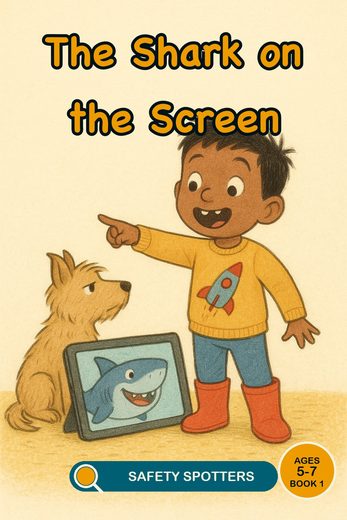
A shark in the local pool, right there on the screen. Ash learns that a picture can look real and still never have happened.
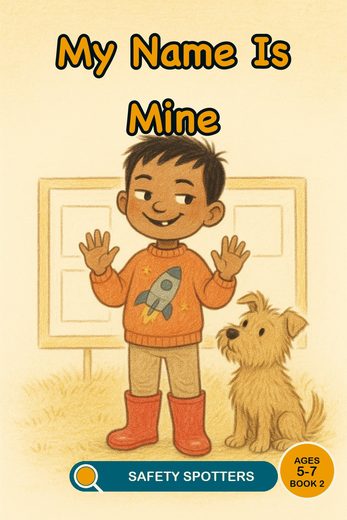
A game asks for Ash's name, school and street. A first lesson in what we keep private online.
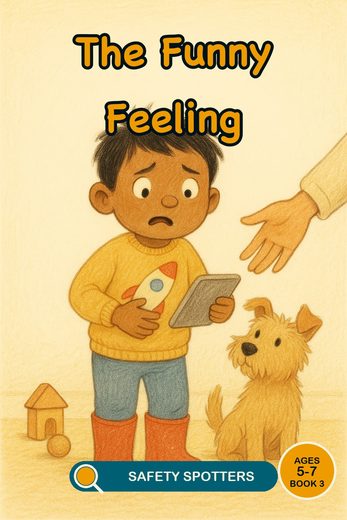
Something online gives Ash a funny feeling in his tummy. The story that says: that feeling is worth telling a grown-up about.
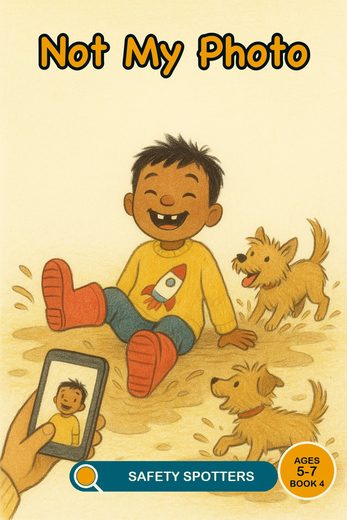
A photo of Ash gets shared without asking. Why other people's pictures are not ours to pass on.
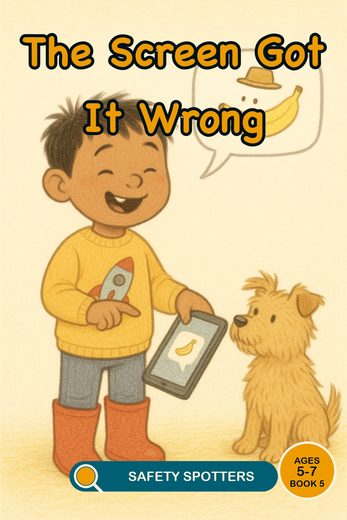
The screen says a banana is a dog. A funny, gentle way in to questioning what a machine tells you.
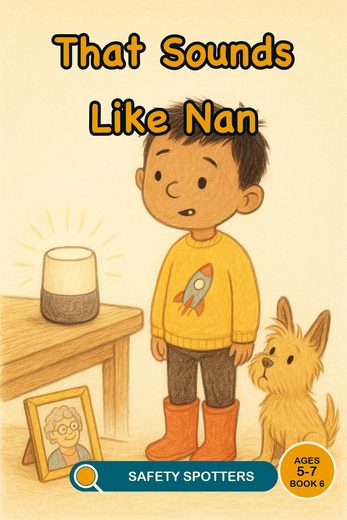
A voice on the phone sounds exactly like Nan. An introduction to voice cloning, and to checking in a way that works.
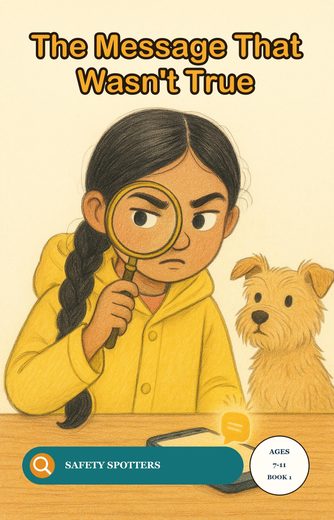
A message arrives from someone they know, but something feels wrong. A gentle introduction to spotting scams and staying safe online.
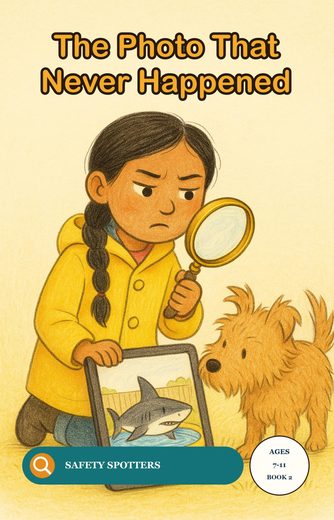
An amazing picture that looks completely real. A friendly guide to spotting fake photos online and checking them before you share.
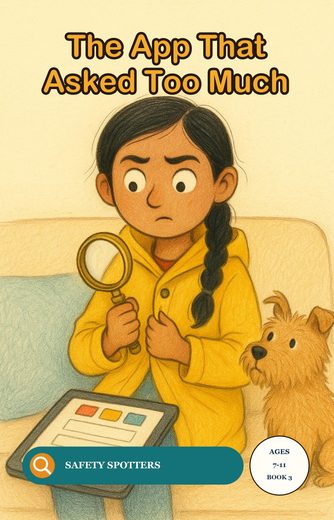
A brilliant new app that asks for too many details. A helpful guide to understanding oversharing and keeping personal information private.
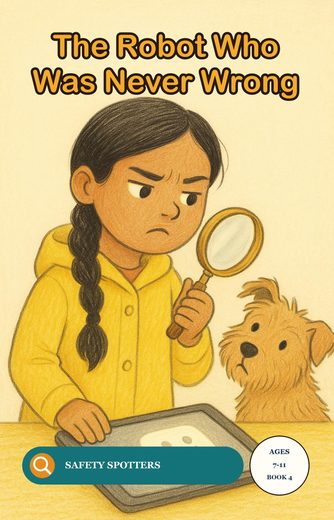
A helpful chatbot speaks with absolute certainty. A simple guide to questioning confident online answers and learning how to check facts.
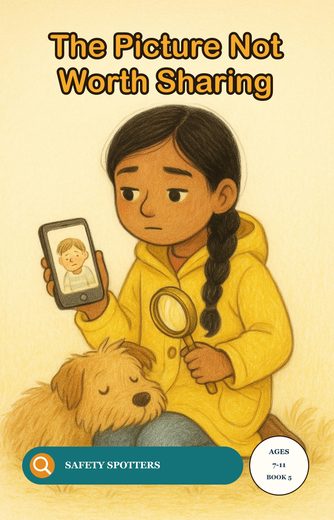
A funny photo of a friend might seem harmless to send. A gentle lesson on photo sharing, asking for consent, and online kindness.
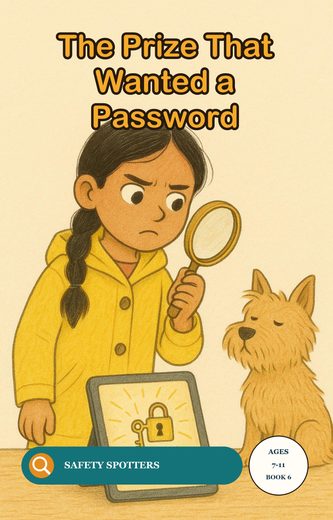
A brilliant free prize pops up in a game chat. A vital guide to protecting your password when deals seem too good to be true.
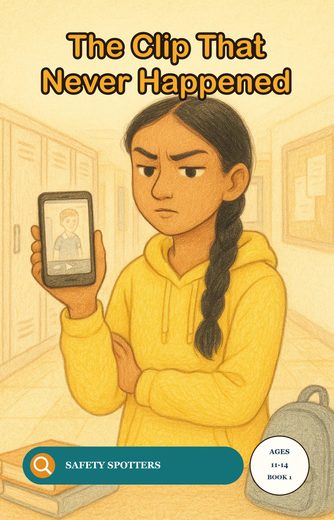
A convincing video clip that looks absolutely real. A crucial introduction to deepfake videos and learning how to question what you see.
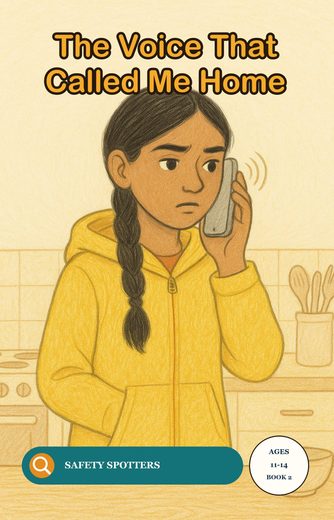
A familiar voice on the phone asking for urgent help. A vital introduction to voice cloning scams and how to verify who is calling.
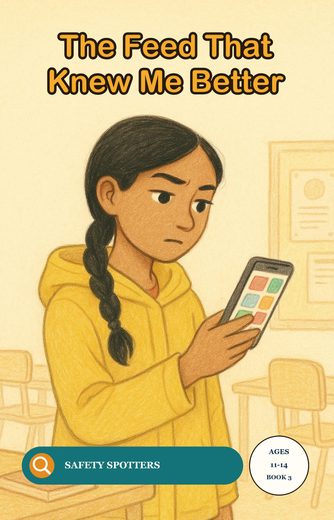
A social media feed that shows you exactly what you want to see. An essential guide to feed algorithms and fake news.
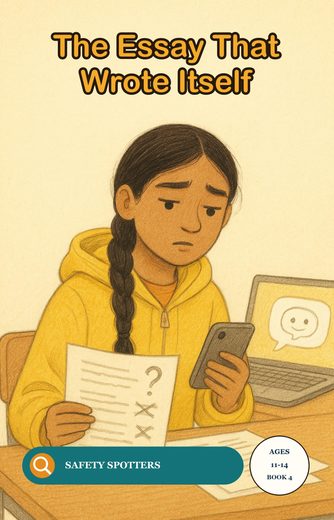
Homework finished in seconds by a clever online chatbot. A practical guide to using AI tools responsibly and always checking your sources.
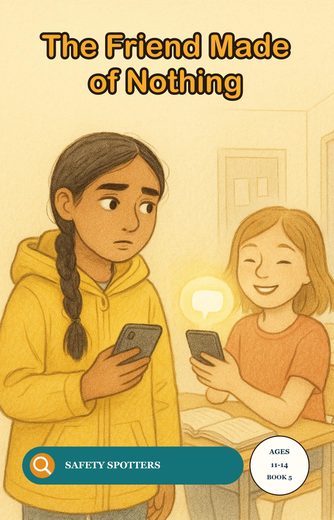
An online friend who is always there to chat and never disagrees. An insightful look at chatbot companions and real friendship.
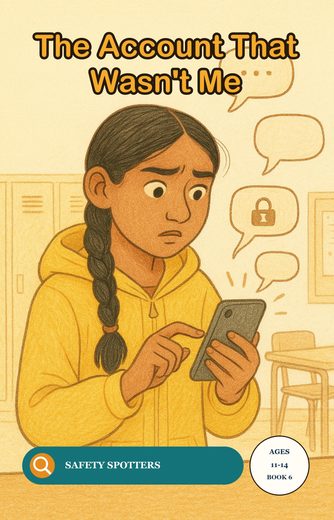
An amazing online offer that asks for your login details. An essential guide to spotting phishing, fake offers, and protecting your passwords.
Questions
They are for ages 5 to 14, across three sets: Little Safety Spotters (5 to 7), Safety Spotters (7 to 11), and Safety Spotters: Case Files (11 to 14).
No. There is no live AI in any book or on this site, and no data is collected from children. Each story is fixed, finished text that never changes.
They are mapped to the online-safety and digital-literacy strands of the curricula across all four UK nations (England, Wales, Scotland and Northern Ireland). They are not endorsed or accredited by any government body.
Not yet. Safety Spotters is new, so we have no formal impact studies or external verification to point to, and we will not claim results we cannot show. The stories are mapped to UK online-safety curricula and reviewed for accuracy. We are gathering feedback from teachers to build that evidence over time.
They are created by Sotiris Spyrou, who works professionally on AI and online trust, using his own frameworks and then reviewing and editing every story for accuracy and age-fit. The approach is story-led: children follow a mystery and practise spotting clues and thinking critically, rather than being lectured. The content is curriculum-mapped, not externally accredited.
Key Stage 1 (KS1), Key Stage 2 (KS2) and Key Stage 3 (KS3).
The ebooks are priced low on purpose, because teachers often pay for classroom resources themselves. Paperbacks are set at the lowest fair price for schools.
Yes. Teachers, schools, parents and carers may copy and share the books in full for educational use, as long as they are not changed or sold on.
Sotiris Spyrou, under the Safety Spotters imprint, part of Verity AI.
All six Little Safety Spotters books (ages 5 to 7) are on Amazon now, in Kindle and paperback. The books for ages 7 to 11 and 11 to 14 are written and in production. See the books.