How schools are teaching children to spot fake images
Schools are teaching children to spot fake images by treating online pictures like puzzles that need solving, rather than automatically believing what they see. Teachers guide students to look for visual mistakes, check where the picture came from, and ask if the image is trying to make them feel strong emotions.
As a parent or a teacher, it is entirely normal to feel a bit overwhelmed by the sudden rise of artificial intelligence. You hear phrases like deepfakes and voice cloning on the news, and it can feel as though the technology is moving far too quickly to keep up. You might worry that if you do not fully understand how these computer programs work, you will not be able to protect the children in your care from digital deception.
The good news is that you do not need a degree in computer science to keep children safe online. Schools across the UK are proving that the most effective defence against fake images is not complicated technology, but good old-fashioned critical thinking. Educators are taking the same basic principles they use to teach reading comprehension and applying them to the digital images children scroll past every day. The broader aims of the Online Safety Act encourage this kind of digital resilience, helping young people navigate the internet with confidence rather than fear.
By breaking the process down into simple, manageable habits, teachers are empowering children to pause, question, and investigate. You can easily adopt these exact same methods in your living room or your own classroom. It is all about shifting a child’s mindset from being a passive consumer of content to being an active, curious detective.
Looking at hands, teeth and backgrounds
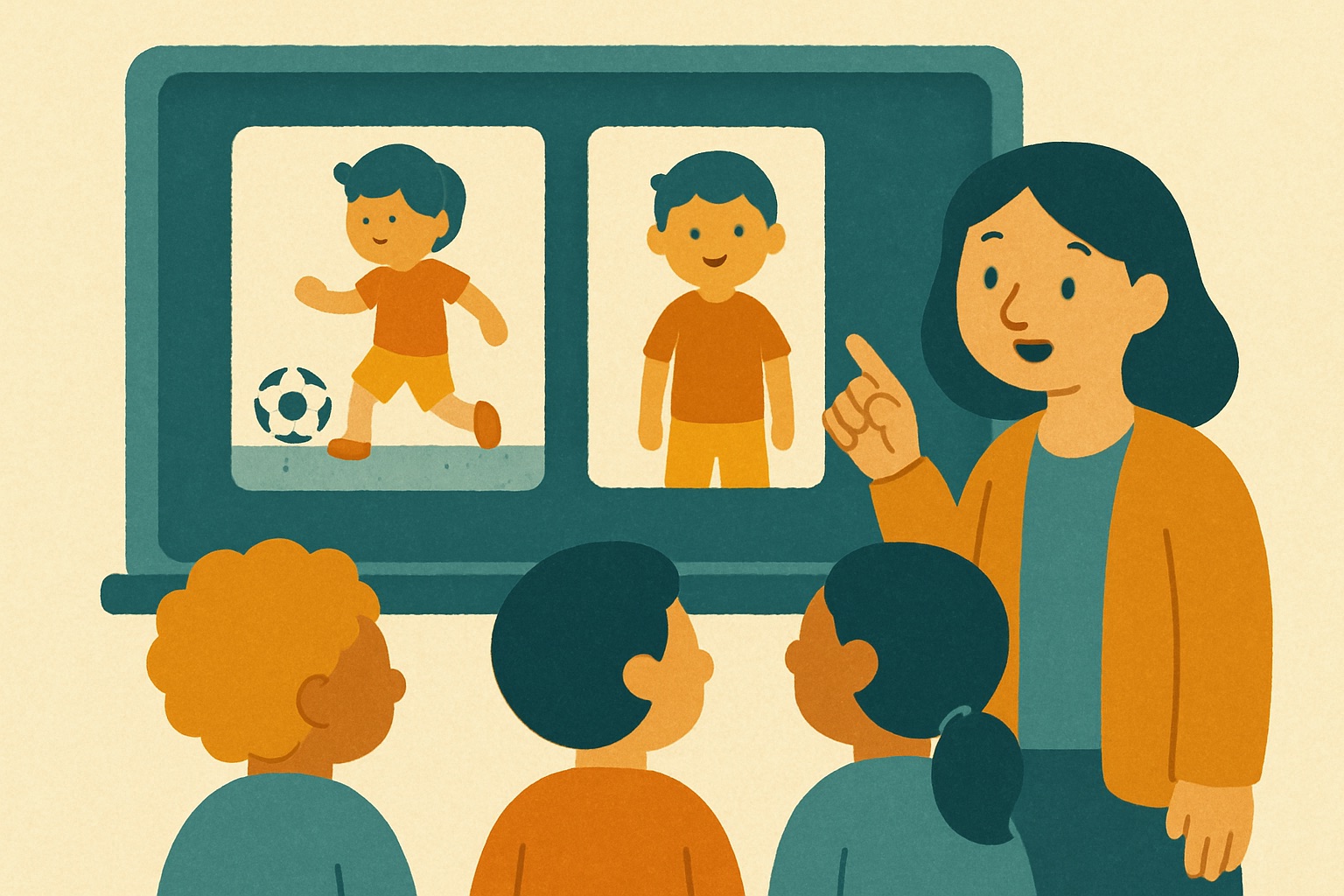
One of the most practical ways schools introduce this topic is by showing children the funny mistakes that artificial intelligence often makes. Right now, computer programs that generate images still struggle to understand basic human anatomy. Teachers will often project an AI-generated image onto the classroom whiteboard and ask the students to count the fingers on the people in the picture. Children are usually quick to notice hands with six fingers, arms bending at impossible angles, or teeth that blur together in unnatural ways.
This turns a potentially scary lesson into a highly engaging game of spot the difference. If a child sees a picture of their favourite pop star holding a strange new gadget, their first instinct might be to beg you to buy it for them. However, if they have been taught to look at the hands holding the object, they might suddenly realise the image is entirely fabricated. Focusing on these small visual glitches gives children a tangible, immediate way to verify what they are looking at.
Backgrounds are another excellent place to play detective. AI programs tend to focus all their processing power on the main subject of the image, leaving the background looking somewhat messy or strange. Teachers encourage students to look past the main focal point and examine the edges of the photo. They look for shop signs with jumbled, nonsensical letters, brick walls that melt into windows, or shadows pointing in the wrong direction entirely.
While it is true that this technology will eventually improve and these visual mistakes will become harder to spot, teaching children to look for them right now is incredibly valuable. It builds the fundamental habit of looking closer. Instead of scrolling past an image in a fraction of a second, the child learns to stop, zoom in, and evaluate the details. This habit of close observation will serve them well long after the six-fingered AI images have disappeared.
Asking questions about the emotional reaction
Fake images are rarely created just for the sake of it. They are usually designed to make the viewer feel a sudden, intense emotion. Whether it is anger, extreme sadness, or sheer outrage, scammers and pranksters know that highly emotional people are far less likely to think critically. Schools are teaching children to recognise this emotional spike as a warning sign. When a student feels a sudden urge to laugh, cry, or shout after seeing a picture, teachers advise them to treat that feeling as a signal to pause.
This concept is often taught as the five-second rule. If a child sees an embarrassing photograph of a politician or a scary image of a local event, their first impulse is usually to share it with their friends immediately. Scammers rely heavily on this speed. They want the picture to travel across social media groups before anyone has the chance to verify it. By teaching children to wait just five seconds and take a deep breath before hitting the share button, schools effectively break the chain of misinformation.
Teachers often use relatable playground scenarios to explain this to younger students. Just as a child might feel angry if they hear a nasty rumour about their best friend, they learn that online images can spread visual rumours designed to manipulate their feelings. Discussing the intent behind a picture helps children understand that behind every fake image is a person who wants them to react in a specific way.
This makes the technical issue of deepfakes a distinctly human issue, which is much easier for parents to discuss at the dinner table. You can ask your child how a particular post made them feel, rather than trying to explain the algorithms behind it. When children understand that their emotions are being targeted, they become naturally more guarded and less likely to be taken in by a digital trick.
Checking the source and finding the original
Once a child has learned to spot visual glitches and recognise emotional manipulation, the next step is investigating where the image actually came from. Schools place a heavy emphasis on source checking. Teachers ask students to look at the account that posted the picture. Is it a well-known, trusted news organisation, or is it a brand new social media account with no followers? Teaching children to consider the source helps them weigh the reliability of the information they are consuming.
For older primary and secondary school children, teachers introduce the concept of a reverse image search. While the term sounds quite technical, the process is incredibly straightforward. It simply involves dragging a photograph into a search engine to see where else it appears on the internet. Teachers demonstrate how an image claiming to show a current event might actually be a photograph from a completely different country taken five years ago.
You can easily use this technique at home when your child comes to you with a worrying picture. For example, if they see a scary image of a dangerous wild animal supposedly loose in your local park, they might be terrified to go outside. Sitting down together and running a quick search might reveal that the photo is actually from a zoo in another continent. Seeing the proof with their own eyes brings immense relief to a worried child and reinforces their investigative skills.
Doing this together shifts the dynamic from an adult lecturing a child to a team of detectives solving a digital mystery. It shows your child that you take their concerns seriously, but that you also have the tools to find the truth. This collaborative approach is one of the most effective ways to build the digital resilience that online safety experts and educators advocate for across the UK.
Keeping the conversation open and relaxed
The most successful school environments do not treat online safety as a terrifying, one-off assembly that is never spoken of again. Instead, they weave it into daily classroom chats and casual conversations. Parents and carers can adopt this exact same approach at home to great effect. The goal is to make talking about digital deception as normal as talking about road safety or what they had for lunch.
A great way to do this is to model the behaviour yourself. If you are scrolling through your own social media feed and spot an obvious fake image, show it to your child. Laugh together about the strange mistakes in the background or the impossible lighting. By keeping the tone light and curious, you take the fear out of the subject. You show them that spotting fakes is a normal part of navigating the internet for adults and children alike.
It is also vital to acknowledge that children will inevitably fall for a fake image or a scam at some point. When this happens, schools focus on removing the shame. Teachers explain that adults, journalists, and even experts are sometimes fooled by clever digital tricks. If your child admits they shared a fake picture or clicked a bad link, praise them for telling you. Getting angry will only ensure they hide their digital lives from you in the future.
This calm, story-driven approach is the core philosophy behind our work. The Safety Spotters books turn these exact lessons into stories children remember, wrapping up the practical advice in an engaging adventure. By reading about characters who face these digital challenges, children internalise the lessons without feeling lectured to, making your job as a parent or teacher that much easier.
Try this at home or in class
- Play the zoom-in game: Next time you and your child see a surprising image online, challenge them to zoom in as far as they can. Ask them to check the hands, read the text on signs in the background, and look at the shadows.
- Do an emotion check: When a child shows you a shocking picture, before you talk about whether it is real or fake, ask them: “How did this picture make you feel when you first saw it?” Help them connect strong emotions to the need to pause.
- Hunt for the source: Pick a viral image and do a reverse image search together on a phone or laptop. Show them how to find out how old the picture is and where it originally came from, acting as digital detectives together.
Frequently asked questions
At what age should I start talking to my child about fake images? You can start as early as five or six. Keep it very simple by looking at funny, obvious AI mistakes and explaining that not everything we see on a screen is real, much like cartoons or magic tricks.
Will AI get so good that we cannot spot the mistakes? Yes, the visual clues like strange hands and blurry backgrounds will eventually disappear as the technology improves. This is why teaching children to check the source and question their emotional reactions is so critical.
How do I explain deepfakes without scaring them? Compare deepfakes to the special effects they see in their favourite films. Explain that the same computer tricks used to make superheroes fly can be used to make it look like real people are doing things they never did.
What if my child has already shared a fake image with their friends? Praise them for being honest with you. Explain that everyone makes mistakes, including adults, and help them send a quick follow-up message to their friends explaining that they found out the picture was not real.
You can get a free digital copy of our guide for parents and teachers at safetyspotters.com/free.