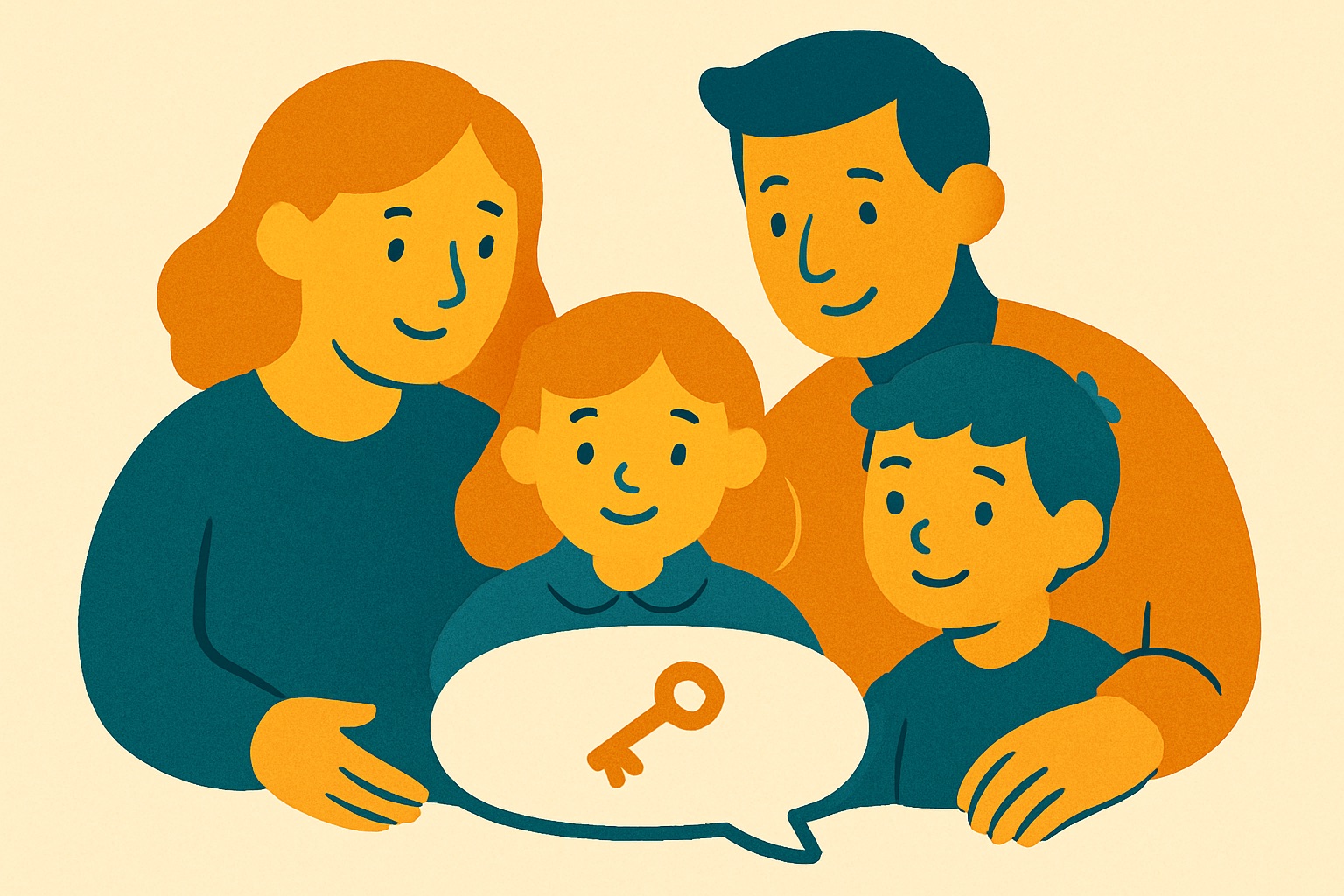
How to create a family safe word to prevent AI voice scams
To create a family safe word, choose a unique but memorable word or short phrase that only your household knows, and agree to ask for it whenever someone calls claiming to be in trouble. This simple step instantly verifies whether the person on the phone is truly your child or an artificial intelligence voice scam.
Voice cloning technology sounds frightening when we read about it in the news. It takes just a short audio clip from a social media video for software to mimic how someone sounds. As a parent or a teacher, hearing that this technology is being used to make fake distress calls can feel incredibly overwhelming. However, you do not need to be a computer expert to protect your family or your students. The solution is entirely low-tech and relies purely on human connection. By establishing a shared secret, you give your children a practical tool that strips away the panic of a strange phone call. We are going to walk through exactly how to set this up today, ensuring your children feel empowered rather than frightened.
Why a simple family safe word works against voice cloning
The mechanics behind voice scams rely entirely on panic and urgency. A scammer will use software to replicate a child’s voice, usually claiming they have lost their phone, had an accident, or need money transferred immediately. The goal is to make the parent or guardian act before they have a chance to think critically. When you hear the voice of someone you love sounding distressed, your natural instinct is to help them straight away. The safe word acts as a pause button in this highly stressful scenario.
By asking a single question, you force the caller to prove their identity. Artificial intelligence cannot guess a random word your family agreed upon over Sunday dinner. If the caller hesitates, avoids the question, or gives the wrong answer, you immediately know the call is not genuine. It turns a highly sophisticated technological trick into a very basic human interaction that the scammer simply cannot pass.
This technique aligns perfectly with the broader principles of the Online Safety Act, which aims to make the digital environment safer for everyone in the UK. While legislation works on a massive scale to hold technology platforms accountable, your family safe word works on an individual level. It puts the control back into your hands. Teachers can also adapt this concept for school trips, giving students a specific phrase to use if they get separated and need to call a staff member from an unknown public phone.
How to choose a word that children will actually remember
The most effective safe words are entirely random to an outsider but highly meaningful to your household. You want to avoid obvious choices like the name of a pet, a favourite football team, or a mother’s maiden name. These details are often publicly available on social media profiles, making them easy for a scammer to find. Instead, think about funny inside jokes, a strange food combination your child loves, or a memorable mistake from a family holiday.
For example, if your child once accidentally dropped a sausage in a swimming pool on a trip to Cornwall, “Cornish sausage” makes an excellent safe word. It is highly specific, completely unguessable, and carries a sense of humour that makes it easy for a child to recall. For younger children, keeping it to a single funny word like “bananapancake” works beautifully. The sillier the word, the more likely it is to stick in their minds without requiring much effort on their part.
If you are a teacher looking to implement this for a school group, you can let the class vote on a secret code word before an excursion. A class of Year 7 students might choose something entirely random like “purple penguin”. Making the selection process collaborative gives the children ownership of the safety measure. When they feel involved in the decision, they are far more likely to remember the word when they actually need it.
How to practise your safe word without causing anxiety
Discussing scams with children aged between five and fourteen requires a careful balance. You want them to be prepared, but you certainly do not want them lying awake at night worrying about strangers cloning their voices. The best approach is to frame the safe word as an exclusive club password rather than a terrifying emergency protocol. Keep the conversation light, practical, and focused on the solution rather than the threat.
You might introduce the idea by simply saying that phones can sometimes be tricky, and it is a good idea to have a secret signal just in case a call gets mixed up. You can practise by randomly asking for the password in low-stakes situations. For instance, you could playfully refuse to pass the ketchup at dinner until they provide the secret word. This builds muscle memory in a fun, relaxed environment, meaning they will not freeze up if they ever need to use it for real.
Older children and teenagers might already be aware of artificial intelligence and deepfakes from their own time on the internet. With this age group, you can be slightly more direct. You can explain that because technology is getting better at copying voices, having a password just makes sense. Teenagers often appreciate being treated like young adults, and giving them the responsibility of a safe word validates their maturity. As teachers, you can incorporate this concept into your broader digital literacy lessons by running a quick roleplay exercise where one student pretends to call another from an unknown number.
What to do if the safe word is forgotten in the moment
Even with the best preparation, human memory can fail during stressful moments. If a child is genuinely lost or in trouble, their panic might cause them to blank on the funny family password. This is completely normal and something you should plan for. If you ask for the safe word and the caller cannot remember it, there are other ways to verify their identity quickly and calmly.
The easiest backup method is to ask a question that requires specific, shared knowledge. Instead of asking for the password, ask something only your child would know the answer to. You could ask who sat next to them at breakfast that morning, what colour the front door is, or the name of their stuffed bear. A scammer using voice-cloning software will either guess incorrectly or try to deflect the question by insisting on the urgency of the situation.
Alternatively, you can hang up the phone immediately and call your child directly on their known mobile number. Scammers often use caller ID spoofing to make it look like the call is coming from your child’s phone, but if you initiate the call, it will go to their actual device. If they answer and are perfectly fine, you will know the previous call was a fake. Reassure your children that if they ever forget the safe word, you have backup plans, and they will never be in trouble for forgetting.
Try this at home
- Call a family meeting and choose your secret word together. Make sure it is something funny and highly specific to your household, rather than something easily guessed from social media profiles.
- Do a test run this week. Ring your child from a different phone number, or have them ring you from a friend’s phone, and practise asking for the safe word in a calm, casual way.
- Agree on a backup question just in case the word is forgotten. Decide on one piece of trivia about your home or daily routine that a stranger could never know.
Learning about digital safety does not have to be a scary or clinical process. The Safety Spotters books turn these lessons into stories children remember, helping them understand artificial intelligence and online deception through relatable, age-appropriate adventures. To help you get started on your journey, you can download a free copy for parents and teachers at safetyspotters.com/free.
Frequently asked questions
How do AI voice scams trick parents? Scammers use software to clone a child’s voice using a short audio clip from social media. They then make fake distress calls to panic parents into sending money before they can think critically.
What type of word makes the best family safe word? The most effective safe words are completely random to outsiders but hold a funny or memorable meaning for your household. You must avoid publicly available details like pet names, mother’s maiden names, or favourite football teams.
How should I introduce the safe word to my children? You should frame the word as an exclusive club password rather than an emergency protocol so they do not feel anxious. Keep the conversation light and practise using the word in fun, everyday situations to build their muscle memory.
Can teachers use safe words with their students? Teachers can easily adapt this concept for school trips in case a student gets separated and calls from an unknown phone. Letting the class collaborate and vote on a secret code word helps ensure the students actually remember it.