The best ways to talk about deepfakes in a PSHE lesson
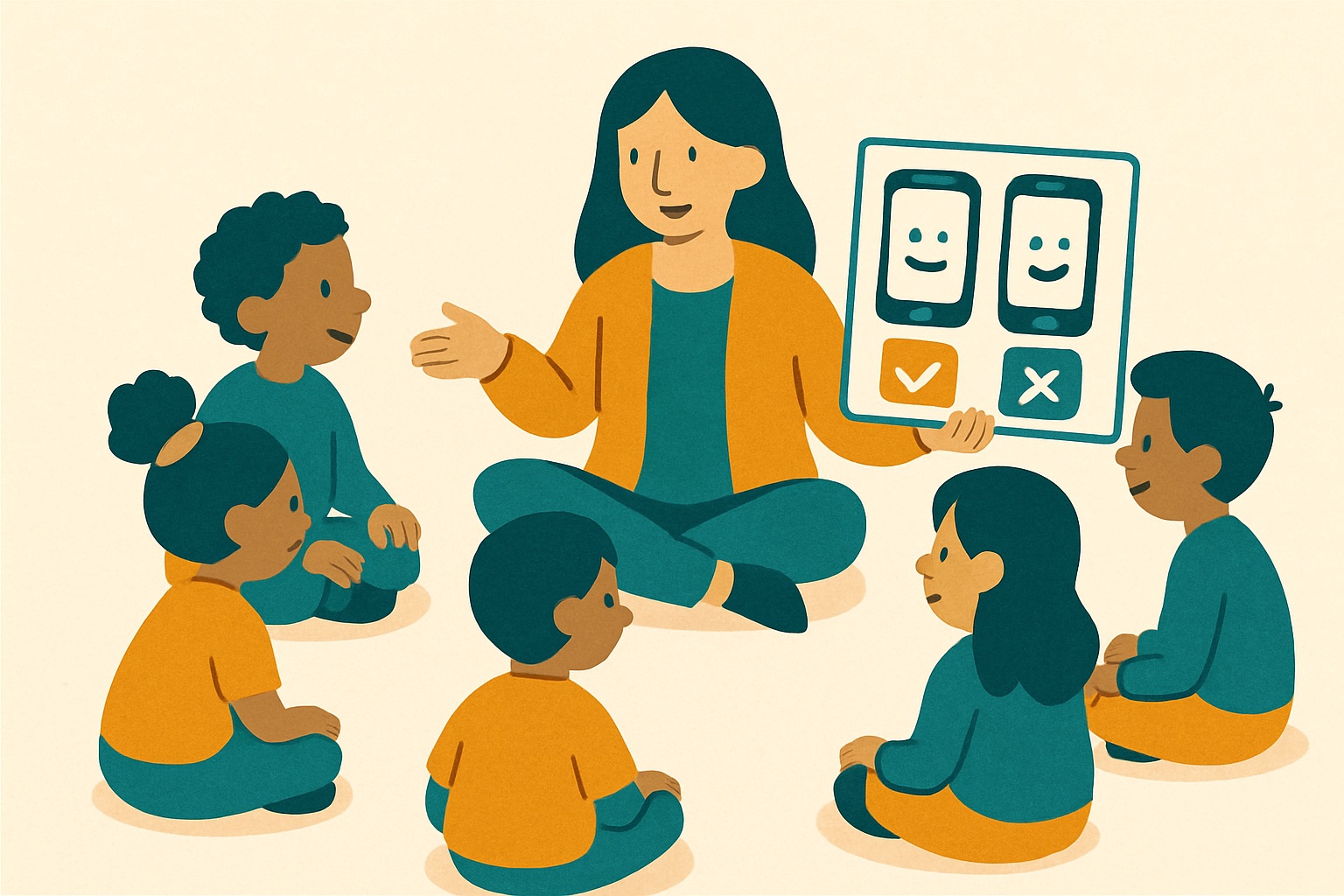
The best way to talk about deepfakes in a PSHE lesson is to approach the topic calmly, comparing AI trickery to the special effects children already understand from films. By teaching them simple visual clues to look for and encouraging them to pause before they react, you empower them to question what they see without feeling scared.
If you are a teacher planning a Personal, Social, Health and Economic education lesson, or a parent trying to keep up with the digital world, the idea of explaining artificial intelligence can feel incredibly daunting. You might read the news about voice cloning and manipulated videos and wonder how you are supposed to protect the children in your care when the technology changes every single week. It is completely normal to feel overwhelmed by this. The good news is that you do not need a degree in computer science to teach children how to spot AI deception.
The core skills we need to pass on are the exact same critical thinking skills we have always taught in schools. We are just applying them to a new kind of media. Just as we teach children to look both ways before crossing the road, we can teach them to look twice at a video before believing it. You already have the teaching skills you need to guide them. By breaking the concept down into small and manageable pieces, you can have a reassuring conversation that leaves your class or your own children feeling confident and safe online.
Start the conversation with curiosity rather than fear
When we talk to children about online safety, our protective instincts often make us lead with warnings. We want to tell them about the dangers of the internet and the bad people who use computers to trick us. However, fear is a terrible teacher. When children feel frightened, they either panic and become anxious about using their devices, or they completely tune out because the warning feels too big and abstract to process.
Instead of starting with scary statistics, begin your lesson with curiosity. Ask the children if they have ever watched a superhero film or a fantasy programme where a character flies or shoots lasers from their eyes. They will all say yes. Ask them how the film directors make that look so real. They will happily tell you about computer graphics, green screens, and special effects. You can then explain that a deepfake is just a cheaper and faster version of those same special effects. It is a computer programme copying a face or a voice.
By framing artificial intelligence as a tool for making special effects, you instantly remove the magic and the mystery. It is no longer a monster hiding inside their phone; it is just a piece of software that can sometimes be used to play tricks. You can explain that while new UK laws like the Online Safety Act are putting more pressure on technology companies to keep our feeds safe, the most powerful shield we have is our own brain. When they understand that they are looking at a trick, they take their power back.
Teach them the physical clues to look out for
Once you have demystified the technology, you can turn your class into digital detectives. Children love solving puzzles, and spotting a deepfake is just a modern game of spot the difference. Tell them that artificial intelligence is very clever, but it still makes silly mistakes that a human brain can catch if it pays close attention.
Start by talking about faces and hands. AI programmes often struggle to understand how human hands work. If you show them an AI generated image, ask them to count the fingers. Are there six fingers? Do the joints bend in a weird direction? Next, tell them to look at the edges of a person in a video, particularly around their hair or the sides of their face. In a deepfake video, these areas often look blurry, glitchy, or slightly disconnected from the background, almost as if the person is wearing a poorly fitted digital mask.
Lighting and blinking are also fantastic clues to share with your class. Ask the children to watch the shadows on a person’s face and see if they match the light in the background. Often, an artificial face will look perfectly lit while the room behind them is entirely different. You can also ask them to watch the person’s eyes. Does the person in the video blink normally, or do they stare for much too long? Do their lips match the exact words they are saying, or does it look like a badly dubbed foreign film?
Use examples that feel relevant to their daily lives. You might describe a fake video of a famous footballer offering to give away free games consoles, or a popular singer saying something completely out of character. Ask the class if it makes sense for a millionaire footballer to message them directly on a Tuesday afternoon with a free gift. Teaching them to look for these physical glitches gives them a practical checklist they can use every time they scroll through their social media feeds.
Focus on the emotional trickery behind the screen
While looking for physical glitches is highly effective, the technology will inevitably improve. This means we must also teach children to recognise the emotional tricks that scammers use. Deepfakes and voice cloning scams rely on making the viewer act quickly before their logical brain has a chance to catch up. They want us to feel something so strongly that we stop thinking.
Talk to your class about the emotional hook. Ask them how they feel when they win a game, or how they feel when they think they have lost something precious. Explain that scammers use videos and voice notes to create those exact feelings of extreme excitement, panic, or urgency. If a video makes them feel like they must click a link right this second, or if a voice note from a friend makes them feel panicked and rushed, that is a massive clue that they need to stop.
Introduce the concept of pausing. Scammers hate it when we take our time. If an older child receives a voice note that sounds exactly like their friend asking them to transfer five pounds urgently, the emotional hook is panic and loyalty. Teach them to break the spell by contacting that friend through a completely different method. They could walk up to them at school the next day, or call their house directly. By teaching children to ask “is this trying to make me panic?” or “is this too good to be true?”, you give them a defence mechanism that works perfectly no matter how advanced the technology gets.
Create a safe environment for when they get it wrong
No matter how well you teach these lessons, children will occasionally get tricked. They might click on a bad link, share a fake video of a celebrity, or believe a deepfake that looks incredibly convincing. When this happens, their first reaction is usually deep embarrassment. The shame of being tricked is precisely what keeps children quiet and stops them from asking an adult for help.
We have to remove this shame completely. During your PSHE lesson, or during a chat around the kitchen table, you must tell them explicitly that adults get tricked by these things every single day. Make sure they know that falling for an AI scam is not a sign of stupidity. It just means they came across a very sophisticated trick. If they know they will not lose their screen time or be shouted at for making a mistake, they are far more likely to come to you the moment something feels wrong online.
This is where storytelling becomes a powerful tool. Abstract rules are hard to remember, but a good story sticks in a child’s mind. The Safety Spotters books turn these exact lessons into stories children remember, showing relatable characters who encounter digital tricks, make mistakes, and learn from them without facing terrible punishments. Reading a story together removes the pressure and allows the child to learn through the characters. It reassures both of you that navigating the online world is a shared journey, not a test they have to pass perfectly on the first try.
Try this in class
Play the detective game Find a safe, well known example of a harmless deepfake or an AI generated image online before the lesson. Show it on the interactive whiteboard and ask the children to work in pairs to find three things that look unnatural. Reward them for noticing strange lighting, weird background text, or extra fingers. This turns anxiety into a fun, confidence building puzzle.
Establish a pause rule Have the class design a poster for a “Pause and Ask” rule. The rule is simple: if a video, picture, or message makes them feel extremely excited or very worried, they must put their phone or tablet face down on the table for ten seconds. That physical act of putting the device down breaks the emotional hook and gives them time to think logically or find an adult.
Create a classroom or family password To combat voice cloning tricks, teach the children the value of a secret password. If someone calls or sends a voice note claiming to be a family member in trouble, the child can ask for the secret word. Have the class brainstorm ideas for good, memorable passwords that a scammer could never guess. This is a highly practical step they can take home to their parents that evening.
Frequently asked questions
At what age should I start talking to children about deepfakes? You can introduce the basic concept to children around the age of seven or eight, which is often when they start watching videos independently. Keep the conversation light and compare it to magic tricks or film effects, gradually adding more detail as they reach secondary school age.
Do I need to understand how AI works to teach this effectively? Not at all. You do not need to understand the computer code behind the software. You only need to understand the human behaviours involved. Teaching a child to be skeptical, to pause, and to talk to a trusted adult is far more valuable than knowing the technical details of machine learning.
What should I do if a child is very upset by a fake video they have seen? First, validate their feelings and reassure them that they are safe. Once they are calm, gently look at the video together if appropriate, and point out the physical glitches to prove it is a computer trick. Finally, show them how to report and block the content so they feel a sense of control.
Are deepfakes illegal in the UK? The legal landscape is catching up quickly, and the creation and sharing of certain malicious deepfakes is now a criminal offence. The Online Safety Act also places strict duties on platforms to protect children. However, because content spreads quickly, teaching children how to spot deception remains an essential life skill.
To help you continue these conversations easily, you can claim a free copy of our latest educational storybook for parents and teachers at safetyspotters.com/free.